
There is a lot of information on building a broad back, with recommendations for a wide range of exercises.
One muscle group arguably has the most significant impact on how your back looks: the latissimus dorsi, commonly known as the lats.
This article covers lat functions and anatomy, how to activate them, and 8 of the best dumbbell lat exercises to experiment with in your training.
Key Takeaways
- The lats are the biggest muscle in the upper body. They cover a large part of the mid and upper back and contribute to the V-taper look and pulling strength.
- Using dumbbells in your lat training allows you to load each side evenly, train through a long range of motion, and create the necessary overload.
- One-arm dumbbell rows, bent-over rows, and chest-supported rows are popular and effective lat movements. Pullovers, Kroc rows, seal rows, and dead-stop rows are less common but just as effective.
- We recommend getting a pair of adjustable dumbbells that go up to at least 50 lbs (preferably 75+) for home lat training. They are affordable, compact, and versatile.
- Download Hevy to store your reusable workouts, log workouts with all the details you want (sets, reps, weight, RPE, and more), track your progress on individual lifts, and monitor your body composition.
What are the Lats?
The lats, also known as the latissimus dorsi, are a pair of large, triangular muscles in the upper body (1). They cover a big portion of the mid and upper back and are involved in motions like:
- Shoulder extension (bringing your arms from any position to behind your body)
- Arm adduction (bringing your arms from your sides toward your midlines)
- Internal arm rotation (inward rotation at the shoulder joint when the elbow is at a 90° angle)
Your lats run from below the shoulder blades, along both sides of the spine, and connect to the pelvis (1). The muscle originates from several points, including the ilium (uppermost part of the hip bone) and scapula, and inserts into the humerus (large upper arm bone).
In gym training, one of the best ways to target and activate the lats is by performing rowing/pulling exercises. Examples include pull-ups, pulldowns, and bent-over rows (2, 3).
Developing the lats is necessary to maximize your back and pulling strength, improve your posture, and achieve the desired V-taper back.
Why Use Dumbbells For Lat Exercises?
Using dumbbells for lat training allows you to train through a longer range of motion, overload effectively, and build both sides more evenly. Plus, dumbbells are super accessible (especially beneficial if you work out in a crowded gym or at home), and you can pick from numerous exercises.
Let’s discuss in more detail.
1. More Even Growth
Dumbbells force both sides of your body to work independently, allowing for more balanced development. In contrast, barbell exercises train both sides simultaneously, which can cause your dominant side to take over and magnify any existing imbalances.
“Including unilateral movements (single-sided exercises) into your workouts means you can identify whether one side is weaker and address those imbalances.” – Sam Rider, author and qualified personal trainer
2. Excellent Range of Motion
Most dumbbell lat exercises offer an excellent range of motion, allowing you to stretch and shorten the muscle group effectively. For example, a dumbbell pullover stretches your upper back as you bring the weight behind your head and promotes an intense contraction at the top of each repetition.
3. A Great Overload
Dumbbells provide an impressive overload. Beginners can start with the lightest pair and gradually progress to the heaviest of the rack, building muscle and back strength along the way.
4. Super Accessible
Big gyms have all the dumbbells you’ll ever need. As a bonus, you won’t have to wait for a pair when it’s crowded. Small gyms also invest in decent dumbbell racks. Even hotel gyms offer at least some dumbbells, so you can stick to the same exercises while traveling.
Plus, you can get a pair of adjustable dumbbells for at-home training since they are affordable, super versatile, and don’t take up much space.
5. Pick from Many Activities
There are many effective lat exercises to include in your training. You can use various loads to target your lats from different angles, even if you only have a pair of adjustable dumbbells.
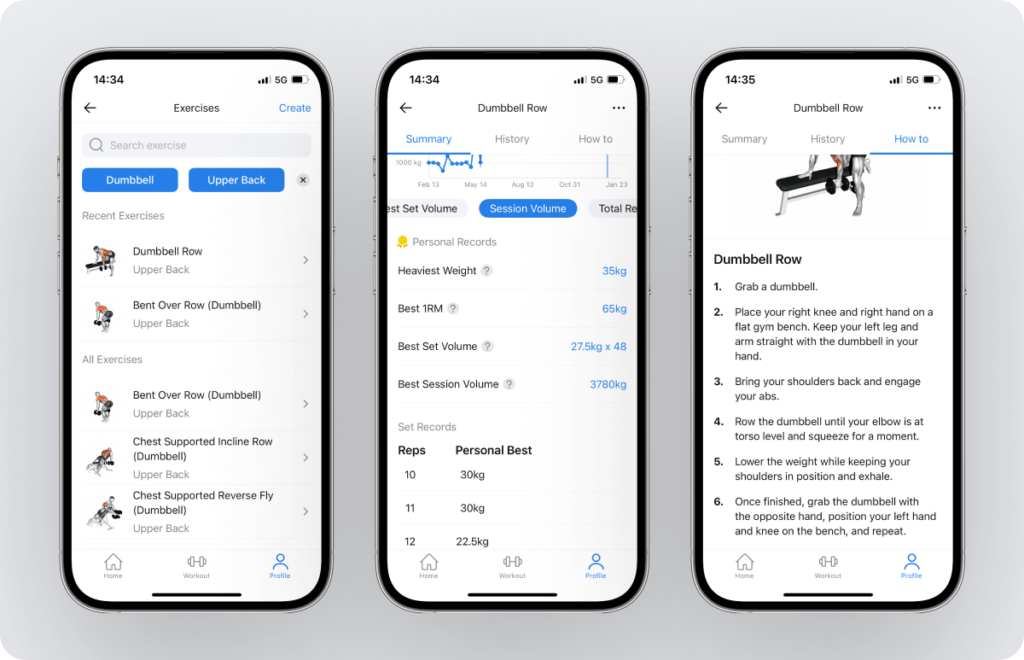
Hevy’s exercise library includes a variety of dumbbell back exercises and 400+ movements for other muscles you can use to build workouts. Each movement comes with how-to instructions and a demo animation. You can track your performance on each activity you log to make sure you’re making progress.
8 Dumbbell Lat Exercises For a Broad And Strong Back
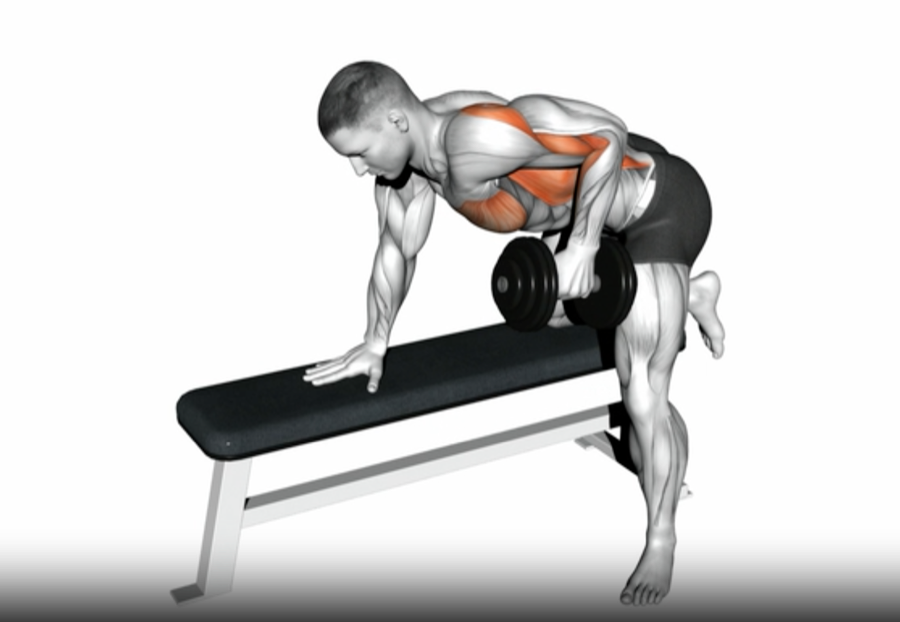
1. Dumbbell Row

Rows are one of the most effective dumbbell lat exercises you can do, even at home.
How to:
- Grab a dumbbell and stand tall.
- Place your free hand on a sturdy object, such as a gym bench or chair.
- Stagger your stance by bringing one foot forward and the other back.
- Lean your torso forward by hinging at the hips. Strive to maintain a neutral back and have your upper body parallel to the floor.
- Retract your shoulder blades, take a deep breath, and engage your abs.
- Pull the dumbbell up and in until your elbow is at torso level and close to your body. Exhale at the top.
- Slowly extend your arm as you breathe in. Pull again.
- Once finished, grab the weight with your other hand and do the same number of reps.
| Pros | Cons |
| It allows you to overload your back with more weight | Some trainees use too much weight and end up swinging the dumbbell up and down |
| You can pull the weight slightly higher because it doesn’t run into your torso |
Quick tip:
Pull the dumbbell smoothly, striving to engage your lats on each rep. Avoid using too much weight, as that can force you to use jerking motions, taking the tension away from the lats.
2. Bent Over Row (Dumbbell)
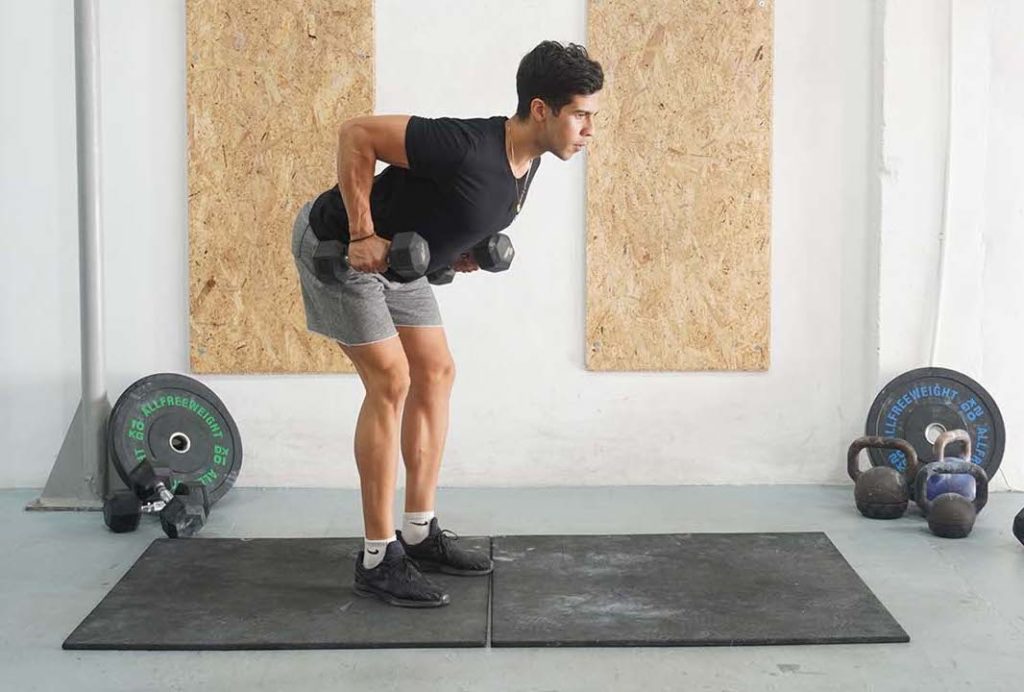
Bent-over rows are among the overlooked lat dumbbell exercises, mostly because people prefer to do the single-arm row we reviewed above.
How to:
- Grab a pair of dumbbells and stand tall with your feet shoulder-width apart and chest out.
- Lean your upper body forward by pushing your buttocks back. Have your torso parallel to the floor and your arms slightly bent.
- Take a deep breath and engage your abs.
- Pull both dumbbells up simultaneously, keeping your elbows close to your body. Bring your elbows to torso level and squeeze your upper back muscles as you exhale.
- Slowly extend your arms without protracting your shoulder blades. Breathe in.
- Repeat.
| Pros | Cons |
| You get to train both sides simultaneously | It can be more challenging to maintain balance |
| The exercise develops your lower back and abdominal muscles |
Quick tip:
Consider using lighter dumbbells for more reps (up to 15 per set). Doing so will make it easier to maintain your position and keep tension on the lats.
Related article: 10 Compound and 4 Isolation Back Exercises for an Impressive V-Taper
3. Chest-Supported Incline Row (Dumbbell)
The chest-supported incline row is also among the best lat dumbbell exercises. Lying on an incline bench reduces the risk of using momentum because your torso is stationary.
How to:
- Grab a pair of dumbbells and position yourself on top of an incline bench (set at 30 to 45 degrees). Alternatively, lie face down on the bench and then reach down to grab the weights.
- Plant the balls of your feet on the floor for balance.
- Retract your shoulder blades and have your arms straight and to your sides.
- Take a breath and engage your abs.
- Pull both dumbbells up simultaneously, bringing your elbows to torso level and squeezing your lats at the top. Exhale.
- Extend your arms after a brief pause as you breathe in.
| Pros | Cons |
| It reduces the risk of ego lifting (excessive body swinging and momentum use) | It is more challenging to set up, especially if you’re using heavier dumbbells |
| It can lead to better lat activation |
Quick tip:
Keep your elbows close to your body and row the dumbbells toward the bottom of your ribcage. Doing so can improve lat activation and emphasize the lower portion of the muscle group.
4. Dumbbell Renegade Row
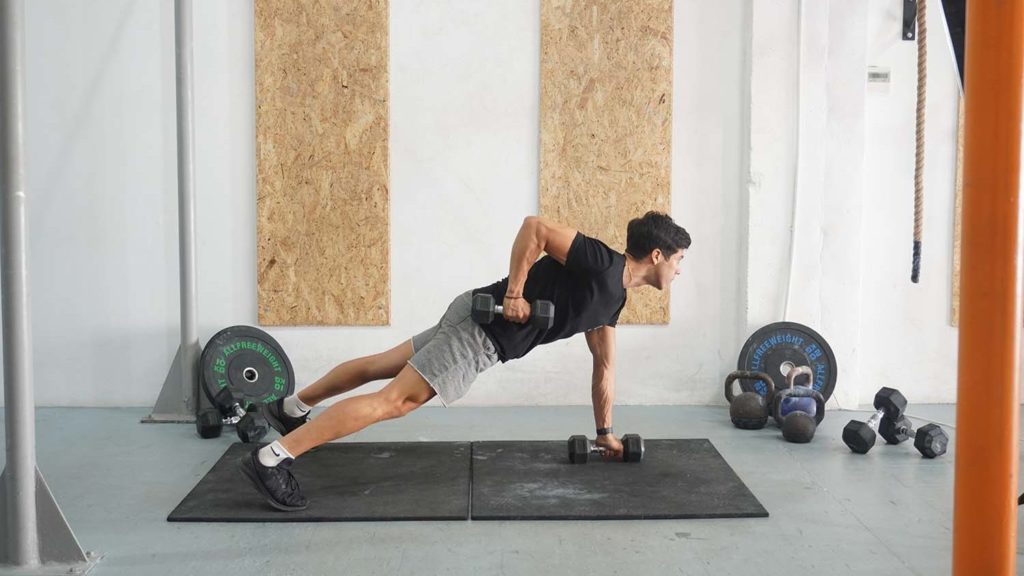
Renegade rows are among the least used lat exercises with dumbbells. People mostly do the movement as part of a functional fitness routine, but it can also work as part of a gym program to promote lat growth.
How to:
- Grab a pair of dumbbells (preferably hexagonal ones for balance) and get down on all fours.
- Position the dumbbells roughly shoulder-width apart on the ground and parallel to one another.
- Grab the weights and extend your body into a push-up position. Have your feet shoulder-width apart and your entire body straight as an arrow.
- Retract your shoulder blades, take a deep breath, and engage your abs.
- Tilt slightly to your left and pull the right dumbbell in one fluid motion, bringing your elbow to torso level and breathing out.
- Extend your arm, setting the dumbbell on the ground as you breathe in.
- Repeat.
- Once you finish training your right side, tilt your body in that direction and do the same number of reps with your left arm.
| Pros | Cons |
| It develops the lats, biceps, chest, shoulders, and midsection | You can’t use as much weight as with other rowing exercises |
| It can improve your athletic abilities better than other back exercises | You need hexagonal dumbbells that stay in position during the exercise |
Quick tip:
Squeeze your abs to draw your ribcage closer to your pelvis. Doing so will prevent your lower back from arching and keep you in a safer position.
Related article: Barbell Back Workouts for a Strong and Muscular Back
5. Dumbbell Lat Pullovers
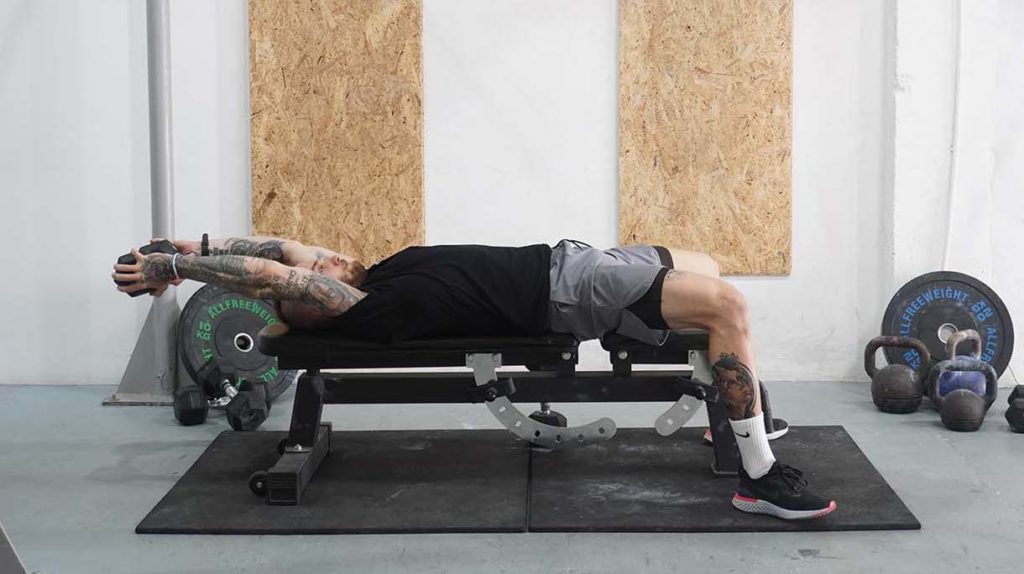
Pullovers come close to being the best dumbbell exercise for lats. However, unlike most other dumbbell lat exercises, these don’t include elbow flexion and involve the biceps to a smaller degree.
How to:
- Grab a dumbbell and sit on the ground with a flat gym bench behind you (perpendicular position).
- Place the weight over your hips and position your upper back on the gym bench.
- Extend your arms and position the dumbbell vertically over your chest. Your palms should face the ceiling and be flat against the top weight plate, forming a diamond shape between your thumbs and index fingers.
- Bend your knees and plant your feet flat on the ground.
- Bring your shoulders back, take a deep breath, and engage your abs.
- Carefully bring the weight behind your head while maintaining a slight bend in your elbows. You should feel a stretch in your lats.
- Pause briefly and pull the dumbbell over your chest as you exhale.
| Pros | Cons |
| It comes closest to being a lat isolation exercise | It can be challenging to maintain your stability |
| It allows you to overload your back with more weight |
Quick tip:
An excellent way to stretch your lats is by dropping your buttocks toward the floor as you bring the dumbbell behind your head. Then, as you pull the dumbbell toward the starting position, thrust your hips toward the ceiling, similar to a hip thrust.
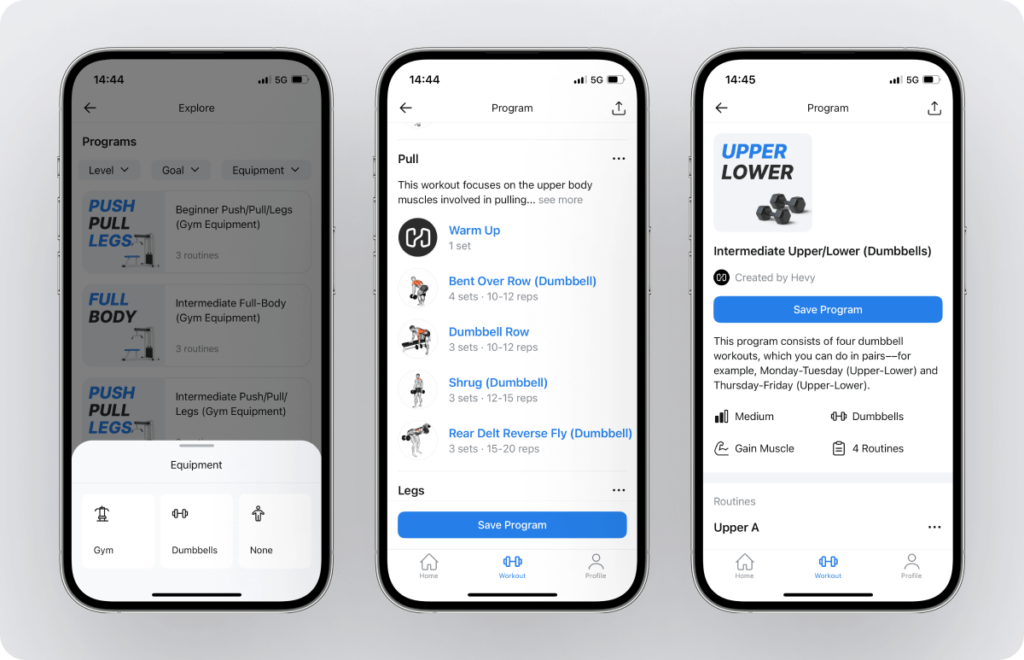
Download the Hevy app, navigate to the program library (Workout > Explore), and use the filter for Equipment > Dumbbells to access multiple programs for all levels. Browse through the list, see the details, and save any program (or single workout) to your library to use anytime.
6. Dumbbell Seal Row
Seal rows are also among the most effective dumbbell lat exercises. The movement resembles chest-supported rows, but you must lie on a flat bench rather than an incline bench.
How to:
- Raise a flat gym bench at a height where you can fully extend your arms without touching the floor when you lie face down. For instance, you can use a couple of plyometric boxes.
- Hold a dumbbell in each hand and lie face down. Extend your arms and have your wrists neutral (palms facing one another).
- Retract your shoulder blades, take a deep breath, and engage your abs.
- Row both dumbbells in one fluid motion, raising your elbows to torso level and breathing out.
- Slowly extend your arms while keeping your shoulders retracted. Breathe in.
- Repeat.
| Pros | Cons |
| It reduces the risk of ego lifting by keeping your torso stationary | It can be challenging to set yourself up for the exercise |
| It emphasizes the lats and allows you to stretch them well as you extend your arms |
Quick tip:
With a stationary torso position, you can use more weight for fewer reps. Ensure that you perform each repetition smoothly and avoid jerking the dumbbells up and down.
7. Kroc Row
Kroc rows resemble barbell rows due to their high overload potential. The difference is that the movement trains one side at a time, reducing the risk of muscle imbalances.
How to:
- Grab a dumbbell and place your free hand on top of an elevated object––for example, on the back support of a gym bench set at an incline. The goal is to maintain a more upright torso.
- With the weight in your other hand, position the arm at your side with your wrist neutral (palm facing your body).
- Stagger your stance for stability, retract your shoulder blades, and engage your abs.
- Take a deep breath and row the dumbbell toward your lower ribcage until your elbow is at torso level.
- Pause at the top position and briefly squeeze your lat as you breathe out.
- Slowly extend your arm as you breathe in.
- Repeat.
- Once finished, grab the weight with your opposite hand and do the same number of reps.
| Pros | Cons |
| The activity encourages you to row the dumbbell to your lower ribcage, making it one of the best lower lat dumbbell exercises | Some trainees make the mistake of using too much momentum, robbing their lats of the tension required for optimal development |
| You can use more weight, which allows you to create greater mechanical tension for hypertrophy |
Quick tip:
Don’t be afraid to use some momentum for the movement, especially on your last reps of challenging sets, but do so within reason. Using jerking motions on each rep can allow you to lift more weight, but it comes at the expense of proper muscle activation.
8. Dead-Stop Dumbbell Row
Dead-stop rows make for an excellent dumbbell lat workout. The movement resembles Pendlay rows because the objective is to rest the weights on the floor between repetitions.
How to:
- Place the dumbbells on the floor.
- Lean forward and bend your knees to grab the weights without lifting them off the ground.
- Retract your shoulder blades, take a deep breath, and engage your abs.
- Pull both dumbbells in one fluid motion until your elbows are at torso level.
- Pause briefly at the top as you exhale.
- Slowly extend your arms as you breathe in.
- Set the dumbbell on the ground for a moment and pull again.
| Pros | Cons |
| Starting each repetition from a dead stop eliminates the stretch reflex (the muscle contraction that results from passive stretching), reducing momentum and promoting better muscle activation | It can be challenging to lean forward enough and maintain a neutral back to set the dumbbells on the floor between reps |
| You must maintain a more parallel torso, leading to better technique |
Quick tip:
Set the weights on the floor for at least a second before initiating a new rep. One common mistake is bouncing the weights off the floor, which affects muscle activation.
Dumbbell Lat Workouts
Let’s now look at creative ways to organize these exercises into effective workouts for beginners and more advanced lifters, and explore how to work the lats with dumbbells:
Beginner Dumbbell Lat Workout
First, we have a basic lat workout for newbies that only includes two exercises. It might not seem like a lot, but as long as you push hard on each set, maintain a consistent tempo, and try to engage your lats on each rep, you will grow and steadily get stronger.
| Exercise | Sets | Reps | Rest Period |
| Bent Over Row (Dumbbell) | 4 | 10-15 | 2 mins |
| Dumbbell Row | 4 | 10-12 | 1.5-2 mins |
Intermediate Dumbbell Lat Workout
The following is a more advanced workout that includes more exercises and sets.
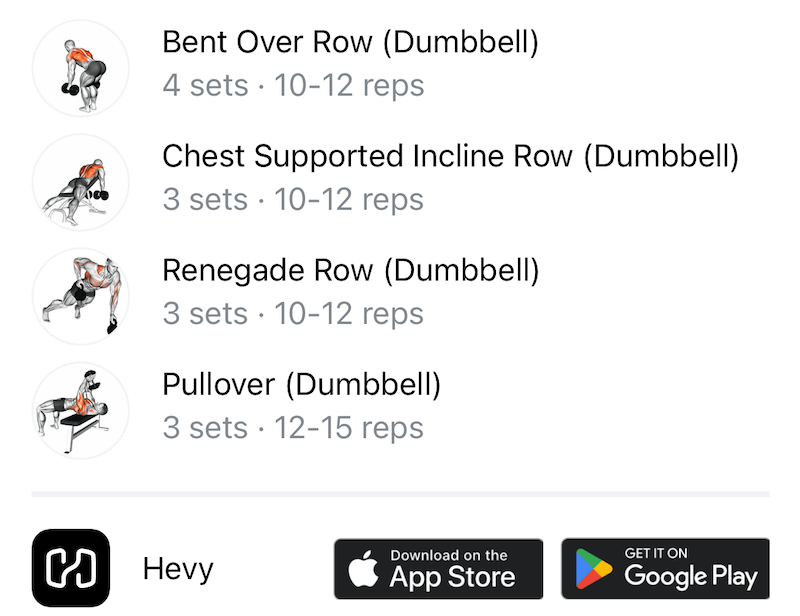
| Exercise | Sets | Reps | Rest Period |
| Bent Over Row (Dumbbell) | 4 | 10-12 | 2 mins |
| Chest Supported Incline Row (Dumbbell) | 3 | 10-12 | 2 mins |
| Renegade Row (Dumbbell) | 3 | 10-12 | 2 mins |
| Pullover (Dumbbell) | 3 | 12-15 | 1.5 mins |
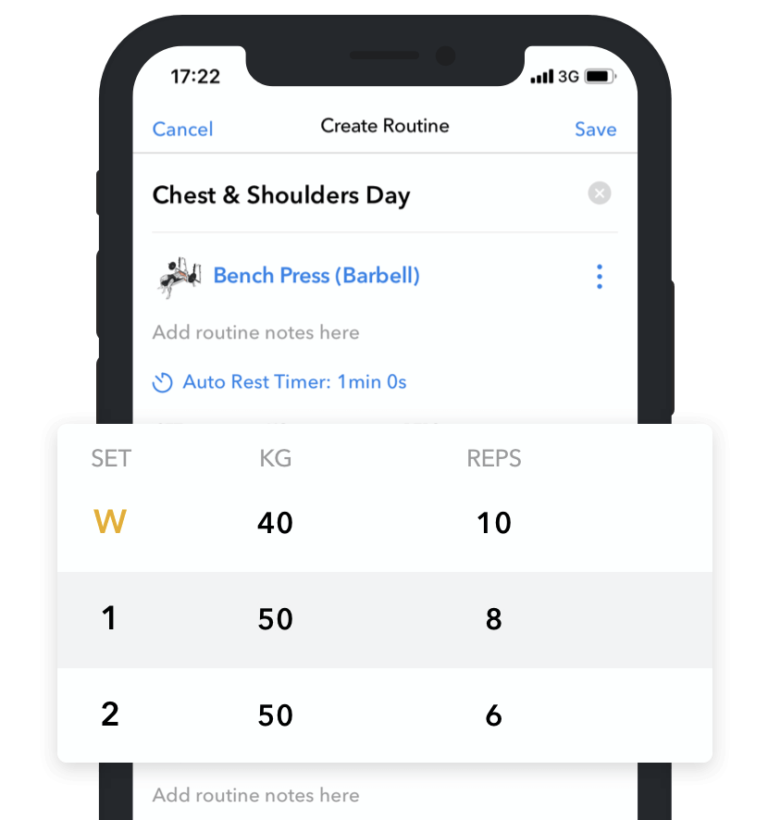
Click this link and tap the blue Save Routine button to save this workout to your Hevy profile. Download Hevy if you haven’t already.
Feel free to adjust any details, such as the exercises, order, rep targets, or rest periods, based on your preferences and how quickly you want to go through the workout. You can also pair movements into supersets, log your RPE, and do a lot more in Hevy.
Also, check out this video if you struggle with lat activation and don’t feel the area working during rows, pulldowns, and pullovers:
Effective Lat Exercises at Home (+Tips)
Traditional dumbbell rows, bent-over dumbbell rows, Renegade rows, and lat pullovers are great exercises you could do at home with nothing but a pair of dumbbells. We recommend grabbing a good pair of adjustable dumbbells (ideally up to at least 50, perhaps even 75 pounds) as a budget-friendly, compact option if you train in your living room, garage, or basement.
Dead stop dumbbell rows are also a great variation, particularly if you’re using lighter dumbbells. The additional form control makes lighter weights more challenging and can be a good way to improve lat activation if you struggle to feel the area during training.
On the other end of the spectrum, Kroc rows can also be a good rowing variation to switch things up. The only downside is that you’d need a heavier weight to challenge yourself, and that might not be possible if your dumbbells only go up to 40-50 pounds.
Beyond dumbbell lat exercises, you can use other workout tools like a pull-up bar (door frame pull-up bars are affordable and mobile; just be sure to secure it well before suspending yourself in the air) for pull-ups, chin-ups, and negative pull-ups, where you reach the top by jumping or stepping on a chair and slowly extend your arms as you descend.
Resistance bands are another fantastic option. They are affordable, durable, and compact, allowing you to do various gym movements like lat pulldowns, pullovers, and even standing horizontal rows. You can create an overload by using increasingly tougher bands, as well as mix two or more bands to create the resistance you need.
Lastly, don’t forget to log your workouts, wherever you do them. The Hevy app lets you create routines (reusable templates), log workouts with details like the weight used, reps completed, and RPE, and track your performance over time.
Conclusion
The above are 8 of the best dumbbell lat exercises. Of course, you don’t have to do all of them, but it certainly pays to experiment and see what works best.
Pick the exercises that feel best, maintain proper form on every rep, consume enough protein, and maintain a slight calorie surplus (4, 5). Progressively overload your body by increasing your workouts’ difficulty, and your lats will grow.
Check out the Hevy app and its highly curated library with 400+ exercises, each with how-to instructions, a demo animation, and other useful info. You can also create custom exercises to reuse when building workouts and browse the program library to find dumbbell-only programs for all experience levels.

FAQs
1. How to perform free weight lat exercises safely?
Focus on three key areas:
- Warm up well before each workout by doing some light cardio, dynamic stretching, and warm-up sets (gradually increasing the load over 1-3 sets) (6)
- Maintain proper form, striving to activate the correct muscles on each rep
- Recover adequately between sets to maintain high performance; up to 3-4 minutes of recovery might be necessary between your heaviest and most challenging sets (7)
2. What is the best way to activate your lats?
It mostly comes down to practice. A helpful mental cue I’ve used with many clients is to imagine that your hand is merely a hook for the weight. Doing so allows you to pull through the elbow, improving lat engagement.
3. Why can’t I feel my lats during dumbbell rows?
Not feeling your lats during dumbbell rows or other exercises is likely due to improper form or using too much weight. In such a case, reduce the load, slow down the tempo, and actively try to establish a mind-muscle connection with your lats.
4. How do I activate my lats before a workout?
One good option is to do various lat exercises (dumbbell rows, lat pulldowns, etc.) with light weights for multiple reps. Again, maintain a slow tempo, squeezing your lats as you pull and allowing them to stretch as you extend your arms.